



Formed for Ministry:

The Enduring Value of a Seminary Education

Formed for Ministry: The Enduring Value of a Seminary Education

David deSilva, Ph.D.
gradient line

Higher education is in an uncomfortable place right now. We are being forced to examine and defend the value of our “product” as at no other time in my experience. But that’s not a bad thing. We need to be kept honest, and we need to remain clear about our mission within, and our contribution to, the larger work of the Church Universal in God’s world.

I think we would all affirm as good work what some (perhaps many) ministers have done without a seminary degree. We would also regard what some ministers have done with a seminary degree as harmful to the “defense and confirmation of the gospel” (to borrow language from Phil 1:7). But the question is not really what “some” have done with or without a seminary degree – and I would rather say, at this point, a seminary education. It would be a mistake to allow the anecdotal outliers to become an excuse not to examine the value of seminary more closely and fairly. The question is what a seminary education can do for your formation as a Christian minister and what you will do with a seminary education for the span of your own ministry. And I think the most honest way I can answer this is to share what it did for me and also what we make it our mission to do for our own students here at Ashland.

I came to seminary with a solid grasp of the contents of the Scriptures, having read through the Bible assiduously since the age of 12. I had no idea how much the introductory courses in Old and New Testament at seminary would add to my appreciation of the message of the Scriptures by helping me listen to them as ancient texts written in foreign languages. Seminary taught me to acknowledge the distance between the cultural values and social practices and theological assumptions that I brought to these ancient texts and the values and practices and assumptions of the world out of which those texts emerged and into which they originally spoke. In the process of recovering distance, I encountered the texts anew and heard them speaking back to me with even greater force, since now they had been set free to challenge so much more of my 21st-century values and practices and assumptions. My own experience taught me that acknowledging these distances (rather than pretending that the distances don’t exist) and learning the skills by which to bridge them responsibly opened me to a much more intimate encounter with the Scriptures because I was hearing them more on their own terms.

I came to seminary with a sense of how God had been at work in Old and New Testament times and how God was now at work in the life of my local church and my own engagement with God in prayer and service. In seminary, I learned about the story of God’s work in the world after the Bible, the grand story of how the Spirit went forth to actualize Jesus’ redemption of people “from every tribe and language and people and nation” to become “a kingdom and priests for our God” (Rev. 5:9-10). The movement of the Spirit that begins to be narrated in the Acts of the Apostles and in the background of the remaining writings of the New Testament continues through the centuries, in every century, to the present day. In other words, I was exposed to the discipline of church history, which locates our moment, our opportunities, our challenges, in the context of this much larger story, the sweep of which is so grand as to sustain us in the face of any cynicism or disillusionment we might feel in a given moment. And church history is full of spiritual forebears whose work—exploring questions of theology, offering spiritual direction through formational and devotional writings, addressing challenges and situations that emerge again and again over the long course of history and across the settings of many continents—is part of our inheritance as people of faith and our toolbox as Christian ministers. I would have had so dismal a grasp of the range of these resources apart from seminary.

Seminary also trained me in a number of core skills for pastoral ministry. I had the opportunity to learn how to use my voice effectively in the pulpit and in liturgy and what was required to communicate clearly and audibly. I was exposed to a variety of approaches to preaching and trained in how to bring a word from Scripture faithfully and effectively to a contemporary body of believers. I was taught how to listen well and attentively, how to offer support to parishioners in a variety of difficult situations and how to help protect parishioners’ agency in a care-giving relationship. I was given the opportunities and resources to think creatively about worship and liturgy, and about the art behind crafting experiences that would facilitate the spiritual formation and discipleship of the people entrusted to my pastoral care.

I can’t overlook what my fellow seminarians brought to my experience (and, I hope, that I contributed also to theirs). Whether stimulated by some course content that we were wrestling with or some more personal questions of call or faith that arose for us, conversations with brothers and sisters in Christ across multiple denominations and traditions, and praying for and worshiping with one another, were an indispensable part of our formation. The multi-denominational experience was so important for coming to an understanding that, across significant differences, we were still family in Christ and that we would be working in ministry throughout our lives not as rivals or competitors, but as subordinates in the many folds of the One Shepherd.

Was it worth the cost? Absolutely. So much of who I am, so much of what I have been able to bring to congregations for the past 35 years, is a product of how my seminary education formed me and resourced me. The question is not whether you can have a solid ministry without a seminary education. The question is: how much deeper and more reliable will be your own engagement with Scripture, how much more informed by the long and rich heritage of the Christian Church, how much more skilled your practice in the various venues through which ministry takes place if you devote yourself to the formative learning and experiences that a seminary education offers?

About the Author,
David deSilva, Ph.D.

Professor of New Testament and Greek
gradient line
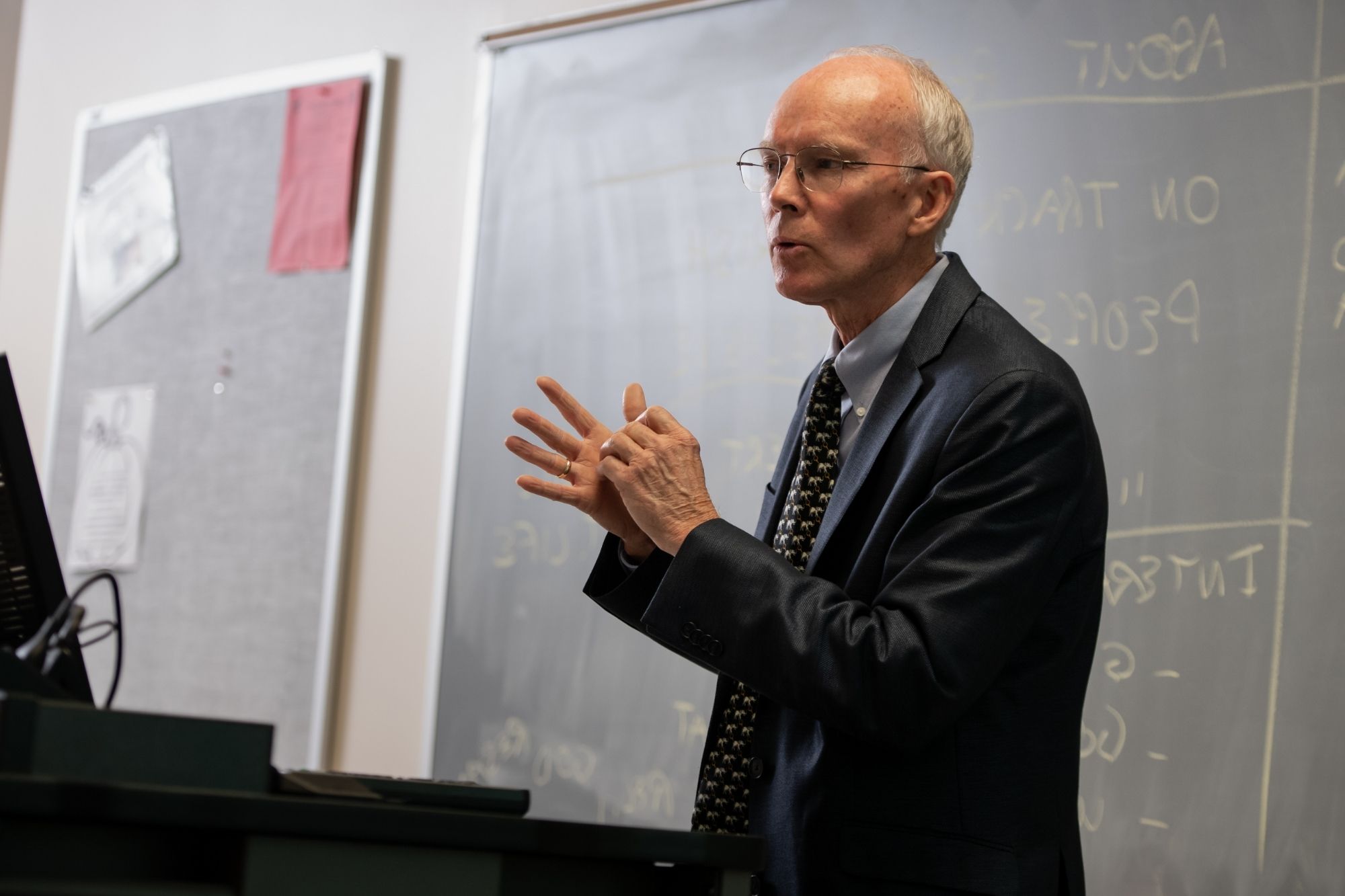
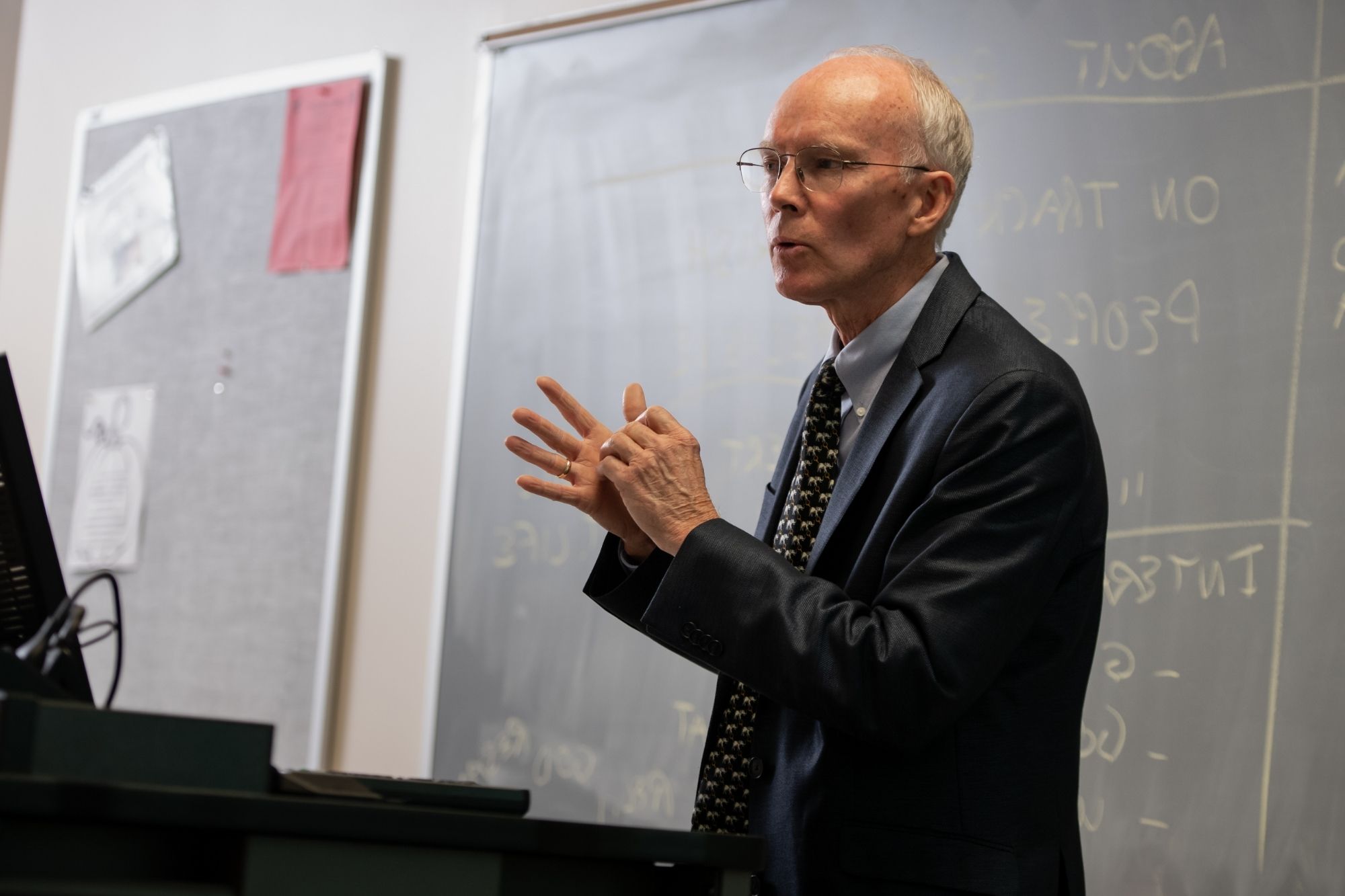
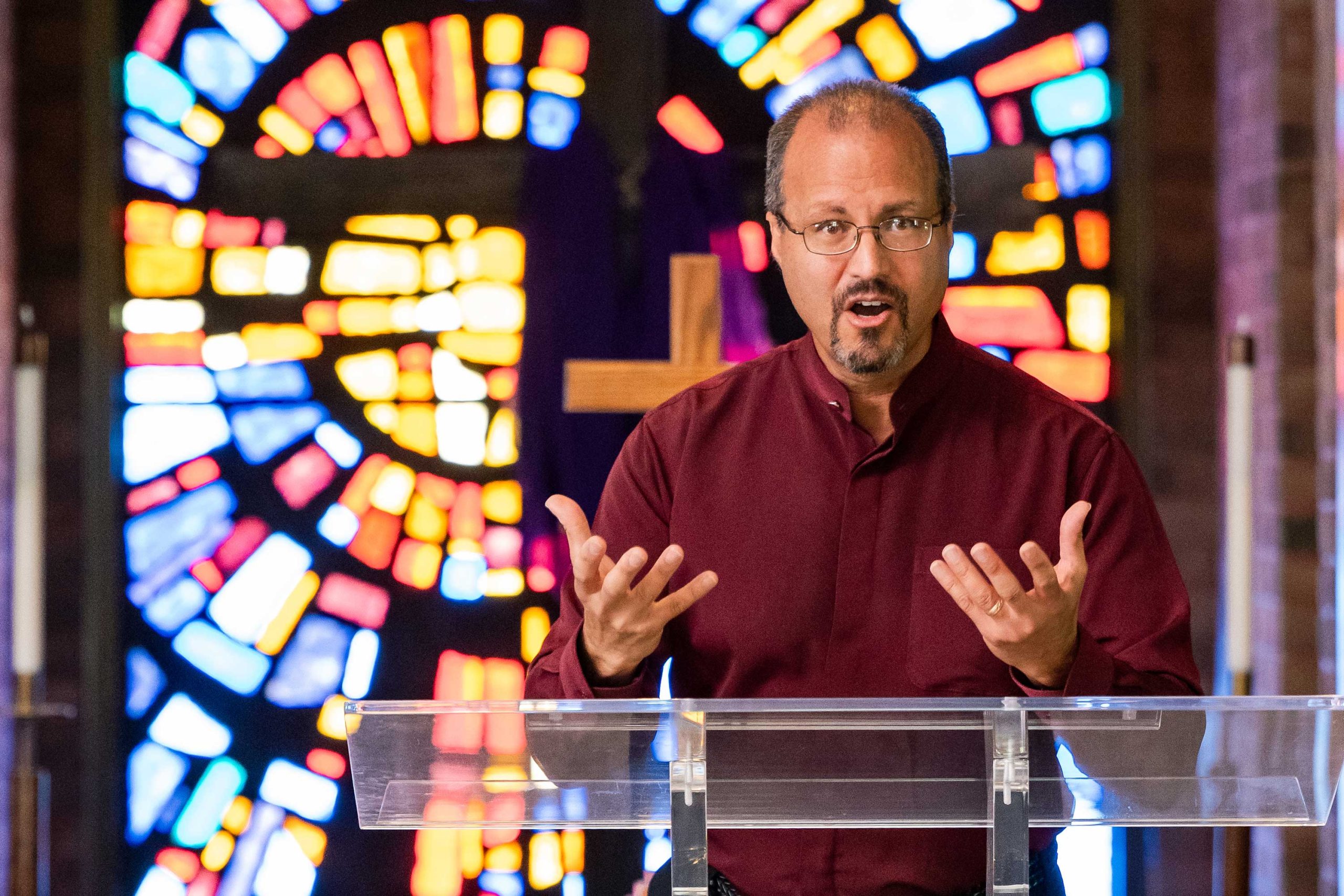
David deSilva giving a lecture

Dr. David A. deSilva, Ph.D. is Trustees’ Distinguished Professor of New Testament and Greek and an ordained elder in the Global Methodist Church. He is the author of over forty books, including Day of Atonement: A Novel of the Maccabean Revolt (Kregel, 2015), The Jewish Teachers of Jesus, James, and Jude: What Earliest Christianity Learned from the Apocrypha and Pseudepigrapha (Oxford, 2012), Seeing Things John’s Way: The Rhetoric of Revelation(Westminster John Knox, 2009), An Introduction to the New Testament: Contexts, Methods & Ministry Formation (InterVarsity, 2004), Introducing the Apocrypha (Baker Academic, 2002), Honor, Patronage, Kinship & Purity: Unlocking New Testament Culture (InterVarsity, 2000), and Perseverance in Gratitude: A Socio-rhetorical Commentary on the Letter “to the Hebrews” (Eerdmans, 2000). He was involved in several major Bible translation projects, serving as the Apocrypha Editor for the Common English Bible and working on the revision of the Apocrypha for the English Standard Version. He has also created several video resources and Mobile Ed courses for Faithlife, including “The Apocrypha: Witness Between the Testaments” (BI 291), “The Cultural World of the New Testament” (NT 201), and “Interpreting the Epistle to the Hebrews” (NT TBA).

Dr. deSilva leads his students into challenging and rewarding topics, not just for the sake of learning but also for the sake of transformation. One of his many contributions to the Kingdom is his collection of published works. In particular, he is most proud of An Introduction to the New Testament, which has nurtured thousands of Christian workers in English, Arabic, Chinese, and Korean contexts even beyond the walls of Ashland Theological Seminary.

More Articles