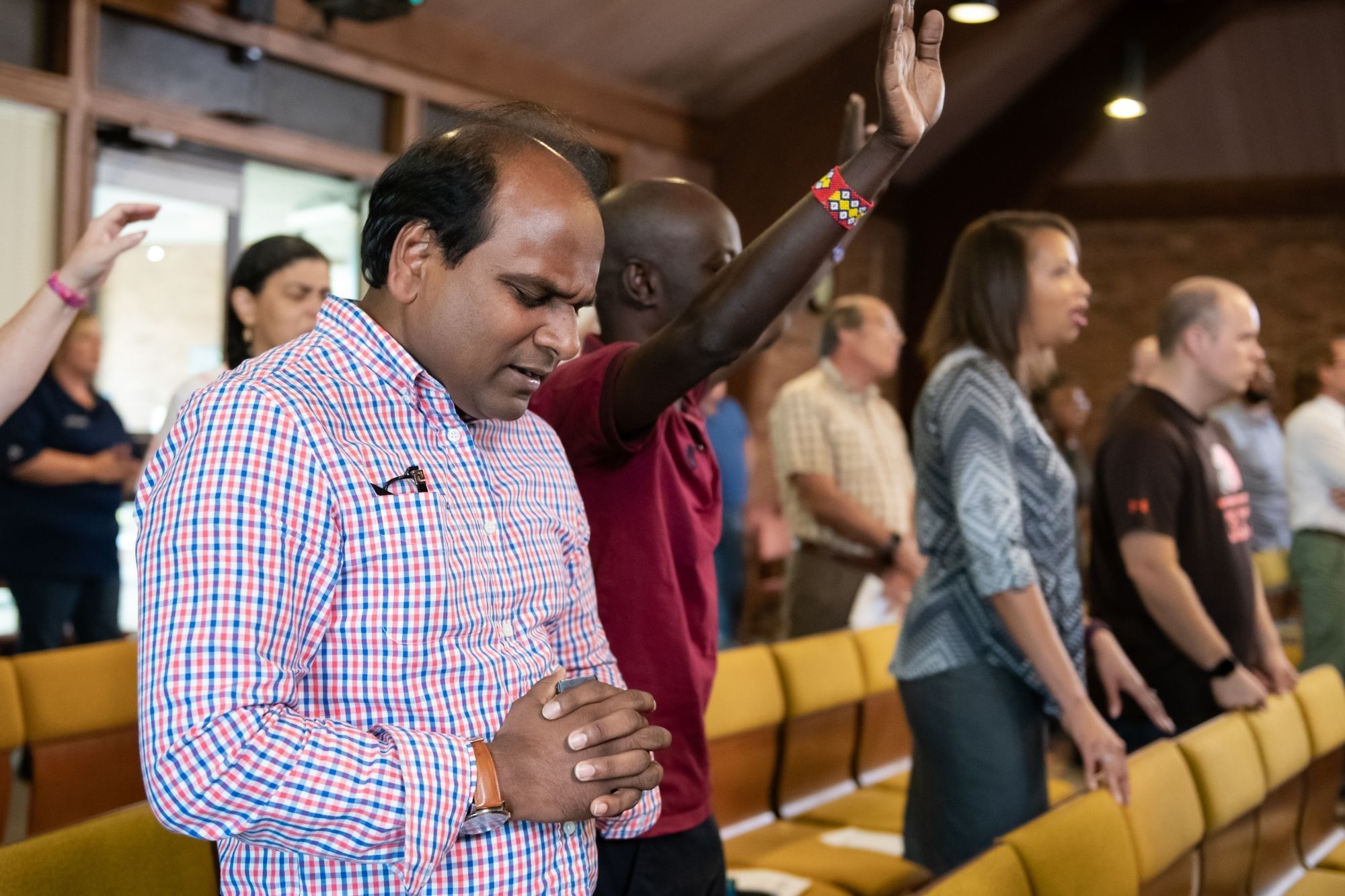
John considered the Christian assemblies (ekklēsiai, 1:4) collectively to constitute, incipiently at least, “a kingdom … for the God and Father” of Jesus Christ (1:6; 5:10). The early Christian leaders’ decision to refer to gatherings of Christ-followers as ekklēsiai (as opposed to retaining terms already in use among Jewish groups for such gatherings) aligns with John’s explicitly political claim concerning their collective identity. “The Greek ekklēsia was an assembly, a coming together of people for political purposes. So, too, the Christian ekklēsia was expected to be the foundation for community life based on the principles expressed in the New Jerusalem vision” – and, one might add, the principles expressed throughout the instructions of Jesus and his envoys found in the New Testament.1 These citizen assemblies of the colonies of the kingdom of God were small and relatively powerless throughout the first century, but they were nevertheless able to create networks of mutual aid and encouragement as well as to support travel, communication, even cooperation between “colonies.” There was an incipient “politics” taking shape and this internal “politics,” this alternative politics, also became a source of witness to the citizens of the Roman empire.
John implicitly encouraged the assemblies of God’s colonies in the seven cities of Roman Asia to invest themselves in doing what is righteous and just in God’s sight, such acts being the manner in which the bride, the New Jerusalem, prepared herself for the eschatological wedding to the Lamb: the “righteous deeds of the holy ones” constituted “the clean, bright linen” with which the bride would adorn herself (Rev. 19:6-8). These same deeds that “follow” those who die in the Lord (Rev. 14:13) exist forever in the adornment of the Christ-followers’ forever home.
As the church’s size and strength increased, so did the visibility of their collective mobilization to do what was righteous, good, and loving in the sight of their eternal ruler. The early Christians deplored the common practice of exposing unwanted infants, whose fate it might be to be taken to be raised as slaves, becoming prey for animals, or simply dying of exposure. They did not rely on the imperial government to institute a change in the laws; they made it their practice to search out the places known as sites for such exposure and adopted and raised the children they found – or else at least tended them and gave them an honorable burial if they were too far gone.2 During a plague that struck Carthage in the mid-third century, Christians did not rely on the imperial government to retool the health care system; led by their bishop, Cyprian, they did the unthinkable and cared for the victims of the plague themselves, taking them into their own homes at tremendous risk to their own health. By the end of the third century, Christians had a reputation for the love that they cherished and acted upon in regard to one another and in regard to the vulnerable around them (cf. Tertullian, Apology 39). As Howard-Brook and Gwyther observed, “the communal context [of the ekklesia] created the possibility for an alternative reality.”3
The Church was not and is not limited in its impact to what it can achieve by political means or through political involvement. In our changed situation, in which Christians account for 25% of the global population and, in the West at least, have great freedom and significant resources, Christians do not have to be absorbed with the political scene and its polarizing clamor in order to do the work God has laid upon us and have a profound impact on the lives of millions. The Church, particularly if it is willing to work as a network of colonies of a single kingdom of God, can accomplish a great deal without any help from political authorities. This is not to be “apolitical,” but to be “otherly political,” to engage in our own constructive “politics” on behalf of the world and in service to God’s agenda for human beings.4 This is not “building” the New Jerusalem. That is the purview of God. But it is a powerful means of witnessing to the life of the kingdom to which we profess allegiance and in line with whose laws we are called to be living now as we follow the instructions of Jesus and his ambassadors, the apostles. It is a means to anticipate the life of the Kingdom of God and incarnate it in the present, however ephemerally and partially. In so doing, we contribute to spinning the “fine linen” in which the Bride will ultimately be arrayed.
We have need of visionary inspiration to imagine alternatives to the well-worn ruts of the society in which we live, that taught us to imagine only the possibilities that it allowed – including the notion that any real social change has to happen by means of the powers and channels of the state. This is admittedly an area in which John offers less help, perhaps because John did not have the benefit of looking out over a world in which a full 25% of the population claimed allegiance to Christ.5 As colonies of God’s kingdom that now enjoy a considerable population with considerable wealth – and that are part of a global network of such colonies that makes mockery of the power of national borders to constrain Christian interest and involvement – of what “righteous deeds” are we truly capable? What infrastructures could we create, quite apart from goading our government to do so, to address the pressing human needs that we identify?6
Revelation defines the task of churches in the United States to be to recover their identity not as gatherings of American Christianity but of colonies of the kingdom of God, the vanguard not of a return to a “Christian America” but the vanguard of the Christ whose “kingdom is not of this world” but that, we fervently pray, will one day supplant all the kingdoms of this world, including the nation we call “America.”
The material in this post will appear in modified form later this year in David A. deSilva, Living in an Unholy Empire: Revelation’s Call to a Higher Allegiance (Hendrickson Publishing, 2026).
1 Wes Howard-Brook and Anthony Gwyther, Unveiling Empire: Reading Revelation Then and Now (New York: Orbis, 1999), 192-93.
2 Referred to in N. T. Wright and Michael F. Bird, Jesus and the Powers: Christian Political Witness in an Age of Totalitarian Terror and Dysfunctional Democracies (Grand Rapids: Zondervan, 2024), 65.
3 Howard-Brook and Gwyther, Unveiling Empire, 194. Pablo Richard (Apocalypse: A People’s Commentary on the Book of Revelation [Maryknoll, NY: Orbis, 1995], 135) also rightly notes that the “departure from Rome” that John urges (Rev. 18:4) involves not only resistance and refusal to participate but also issues a summons “to create alternatives.”
4 Cf. Howard-Brook and Gwyther (Unveiling Empire, 192-93): “John’s vision expects the ekklēsia to be the place in which a new ‘government’ is born.”
5 For one attempt to discern the guidance implicit in John’s vision, see David A. deSilva, Seeing Things John’s Way: The Rhetoric of the Book of Revelation (Louisville: Westminster John Knox Press, 2009), 346-349.
6 Under totalitarian regimes and similarly hostile environments, the “small efforts” may still be the only possible ones, but important nonetheless as symbolic acts of resistance and as the way to live humanly (see William Stringfellow, An Ethic for Christians and Other Aliens in a Strange Land [Waco: Word, 1976], 118-119; deSilva, Seeing Things, 345).
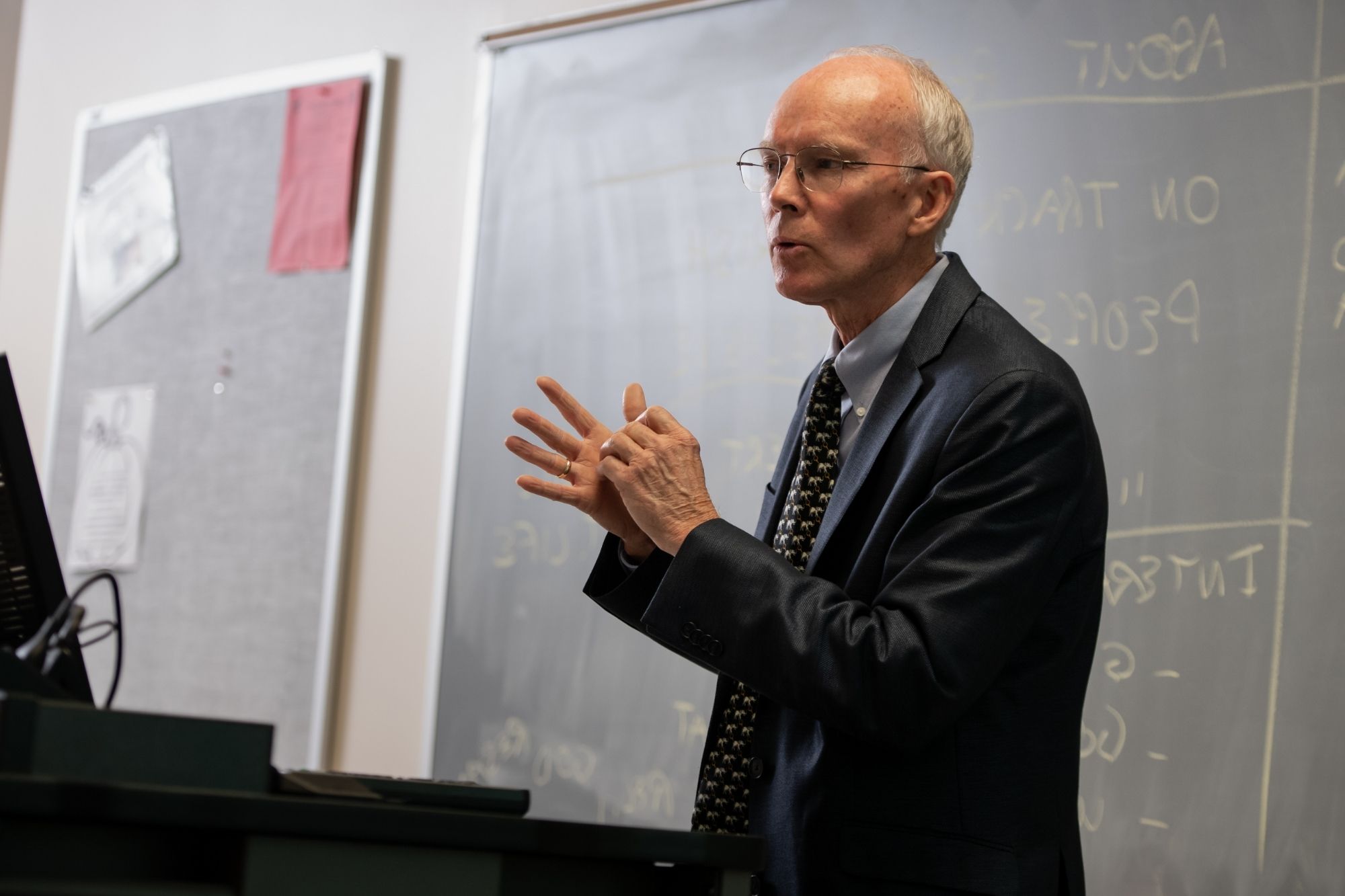
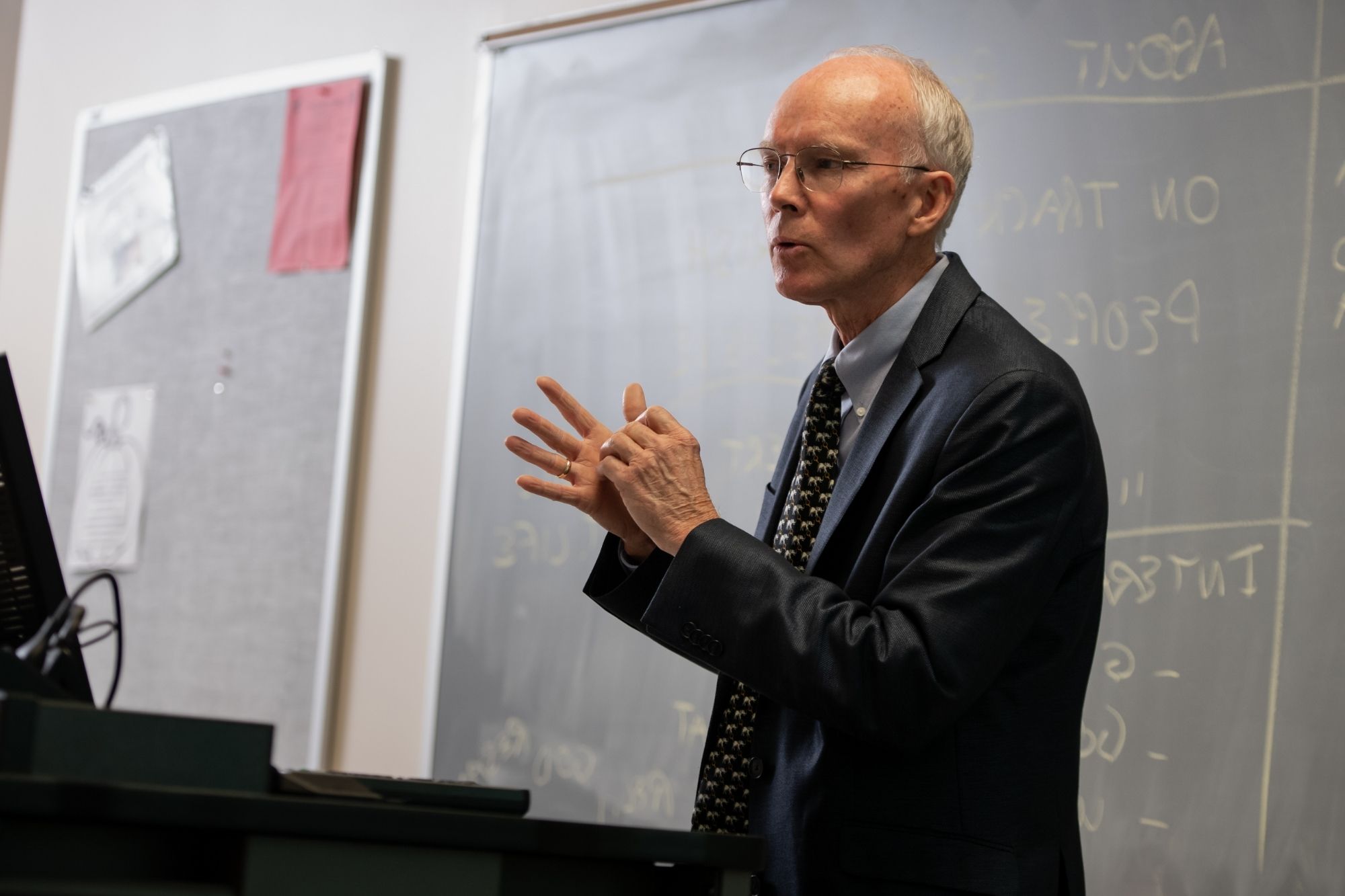
Dr. David A. deSilva, PhD is Trustees’ Distinguished Professor of New Testament and Greek and an ordained elder in the United Methodist Church. He is the author of over twenty-five books, including Day of Atonement: A Novel of the Maccabean Revolt (Kregel, 2015), The Jewish Teachers of Jesus, James, and Jude: What Earliest Christianity Learned from the Apocrypha and Pseudepigrapha (Oxford, 2012), Seeing Things John’s Way: The Rhetoric of Revelation(Westminster John Knox, 2009), An Introduction to the New Testament: Contexts, Methods & Ministry Formation (InterVaristy, 2004), Introducing the Apocrypha (Baker Academic, 2002), Honor, Patronage, Kinship & Purity: Unlocking New Testament Culture (InterVarsity, 2000), and Perseverance in Gratitude: A Socio-rhetorical Commentary on the Letter “to the Hebrews” (Eerdmans, 2000). He was involved in several major Bible translation projects, serving as the Apocrypha Editor for the Common English Bible and working on the revision of the Apocrypha for the English Standard Version. He has also created several video resources and Mobile Ed courses for Faithlife, including “The Apocrypha: Witness Between the Testaments” (BI 291), “The Cultural World of the New Testament” (NT 201), and “Interpreting the Epistle to the Hebrews” (NT TBA).
Dr. deSilva is a brilliant professor who leads his students into challenging and rewarding topics, not just for the sake of learning but also for the sake of transformation. One of his many contributions to the Kingdom is his collection of published works. In particular, he is most proud of An Introduction to the New Testament, which has nurtured thousands of Christian workers in English, Arabic, Chinese, and Korean contexts even beyond the walls of Ashland Theological Seminary.
A landmark in Dr. deSilva’s spiritual life was the Gospel of Matthew, which he read in its entirety as a young boy. God used that reading to bring him into an encounter with Jesus. Dr. deSilva also cites the liturgy and hymnody of the Episcopal Church as very formative in his walk with Christ.
Dr. deSilva has a gift for music, having been an organist and choir director in the church setting since his undergraduate years. He’s even had some anthems and organ arrangements published. His favorite types of music are Renaissance and Baroque.
In addition to his musical interests, Dr. deSilva enjoys pulse-pounding movies, Indian food, and traveling to Sri Lanka and around the Mediterranean with his wife Donna Jean.